Case Study · Operations & Multi-Tenant SaaS
Veyra
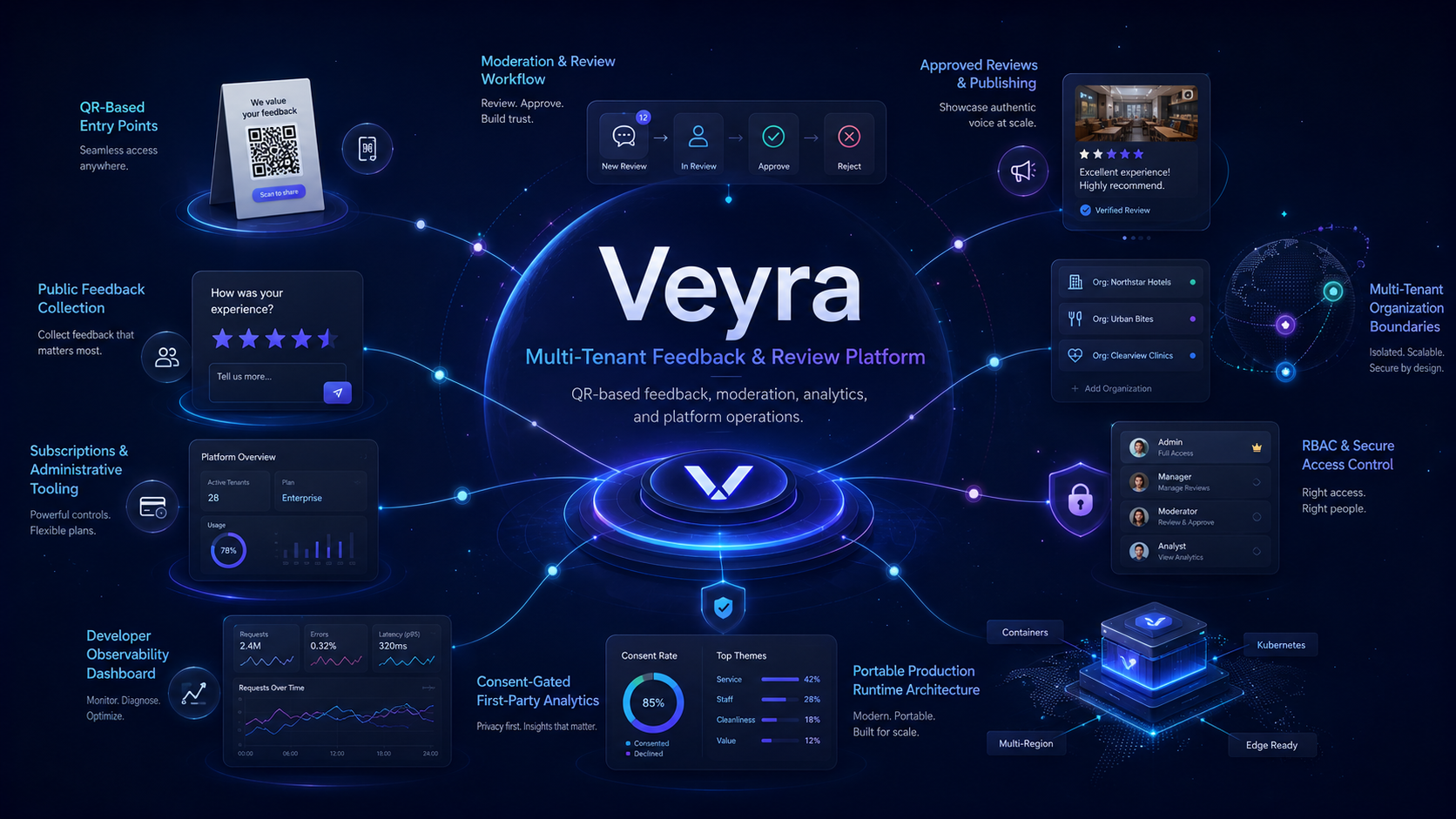
Veyra is a multi-tenant feedback and review-management platform designed for organizations to collect public feedback through QR-based entry points, moderate responses, publish approved reviews, manage subscriptions, and operate the platform through administrative and developer tooling.
As System Architect and Lead Developer at Nyebe Creations Studio, I designed the application structure, tenant data boundaries, custom application RBAC, developer observability dashboard, consent-gated first-party analytics, and portable production runtime architecture.
Overview & Architectural Focus
While public QR code scanning serves as the initial customer interaction point, Veyra is fundamentally a multi-tenant SaaS platform built for security, operational visibility, data governance, and tenant isolation.
The primary engineering effort was focused on building a robust backend service architecture, explicit tenant data boundaries, custom Role-Based Access Control (RBAC), developer operations analytics, consent-gated first-party analytics, and reproducible runtime deployment profiles.
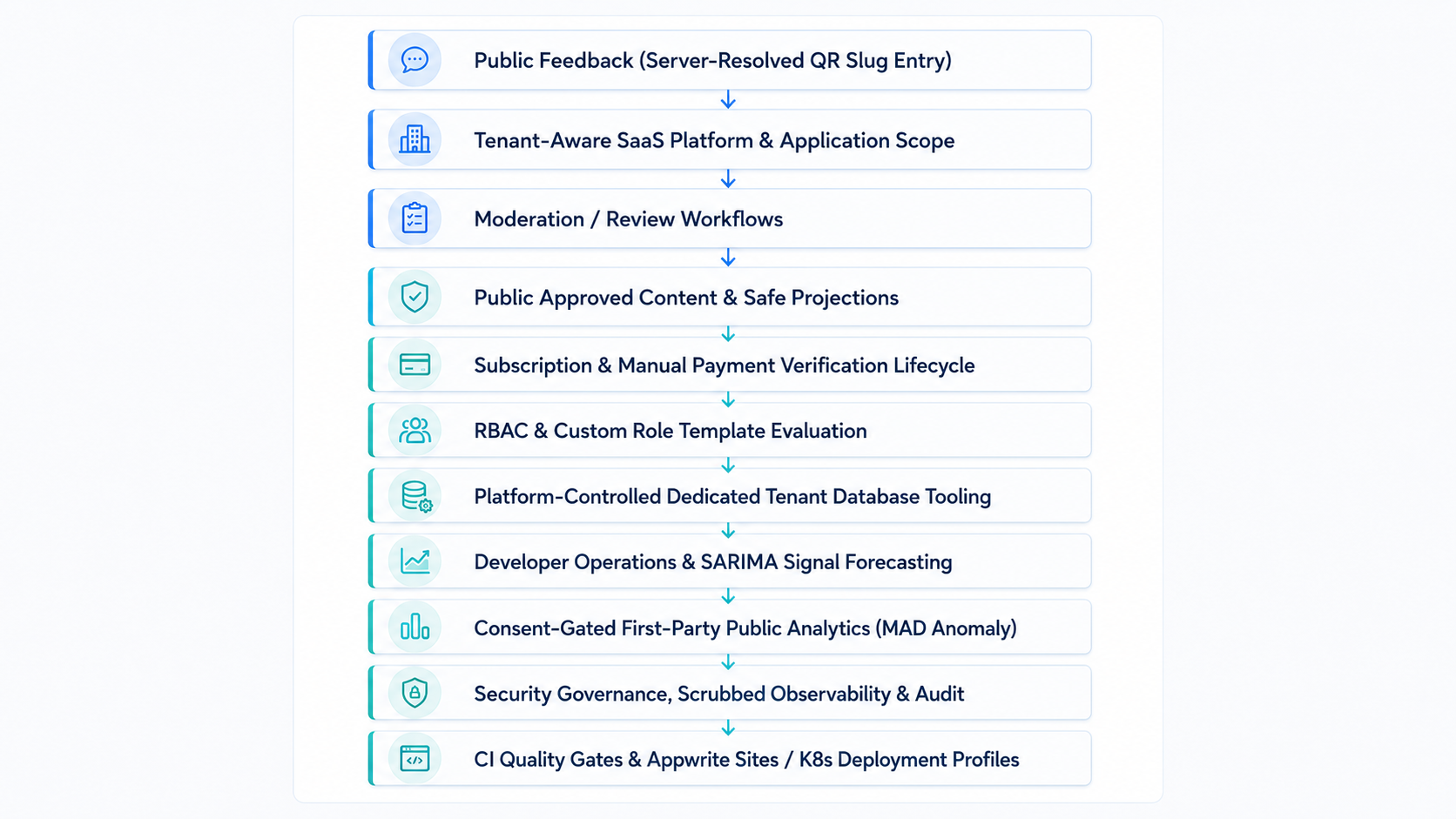
Central System Narrative Flow
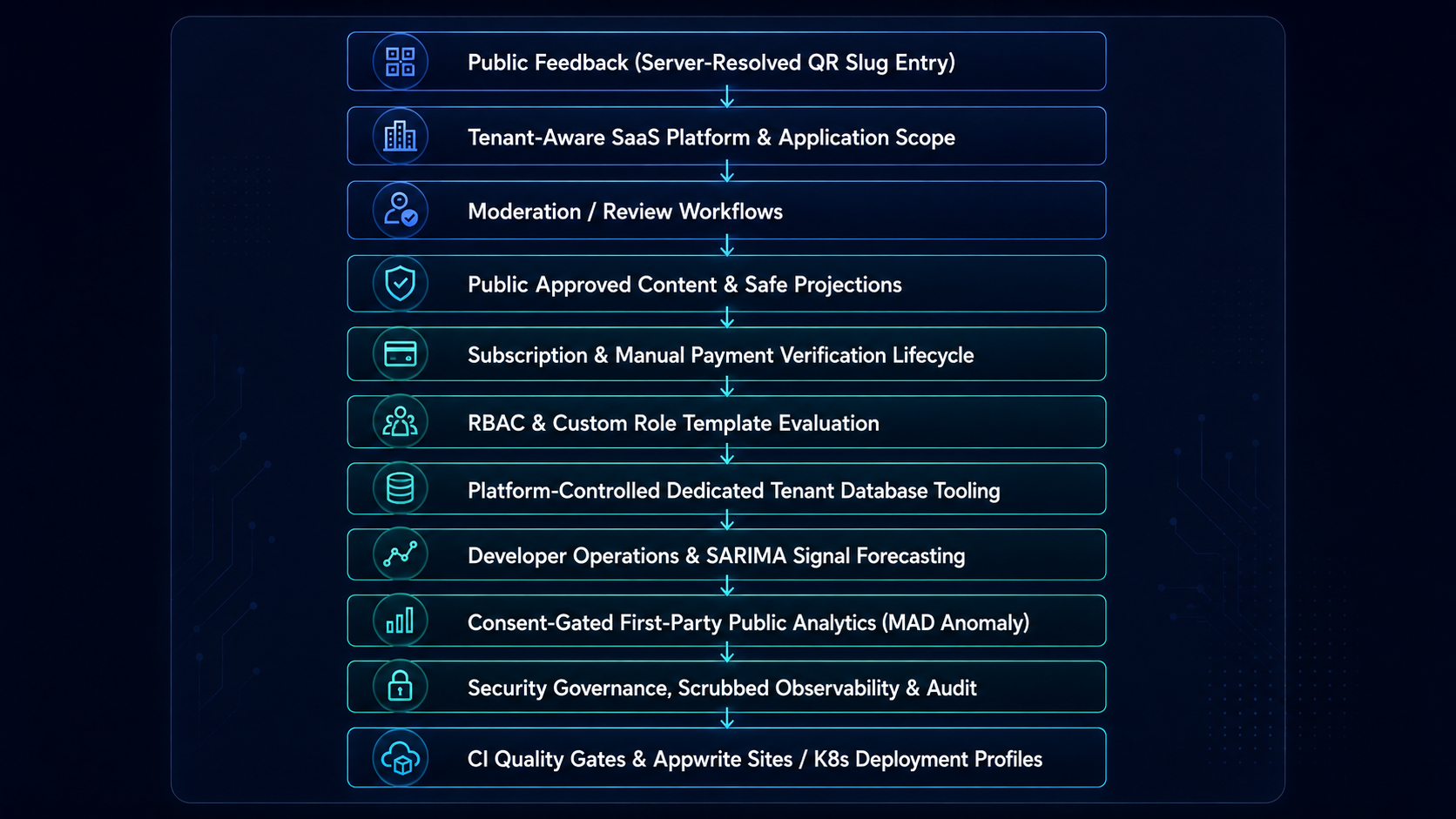
The complete end-to-end Veyra architecture connects public customer feedback entry with tenant management, security enforcement, developer analytics, and runtime deployment profiles:
Ownership Context & Technical Leadership
Veyra is a team project developed under Nyebe Creations Studio. In my role as System Architect and Lead Developer, I provided technical direction across system design while directly implementing core backend services and security logic.
Multi-Tenant Architecture
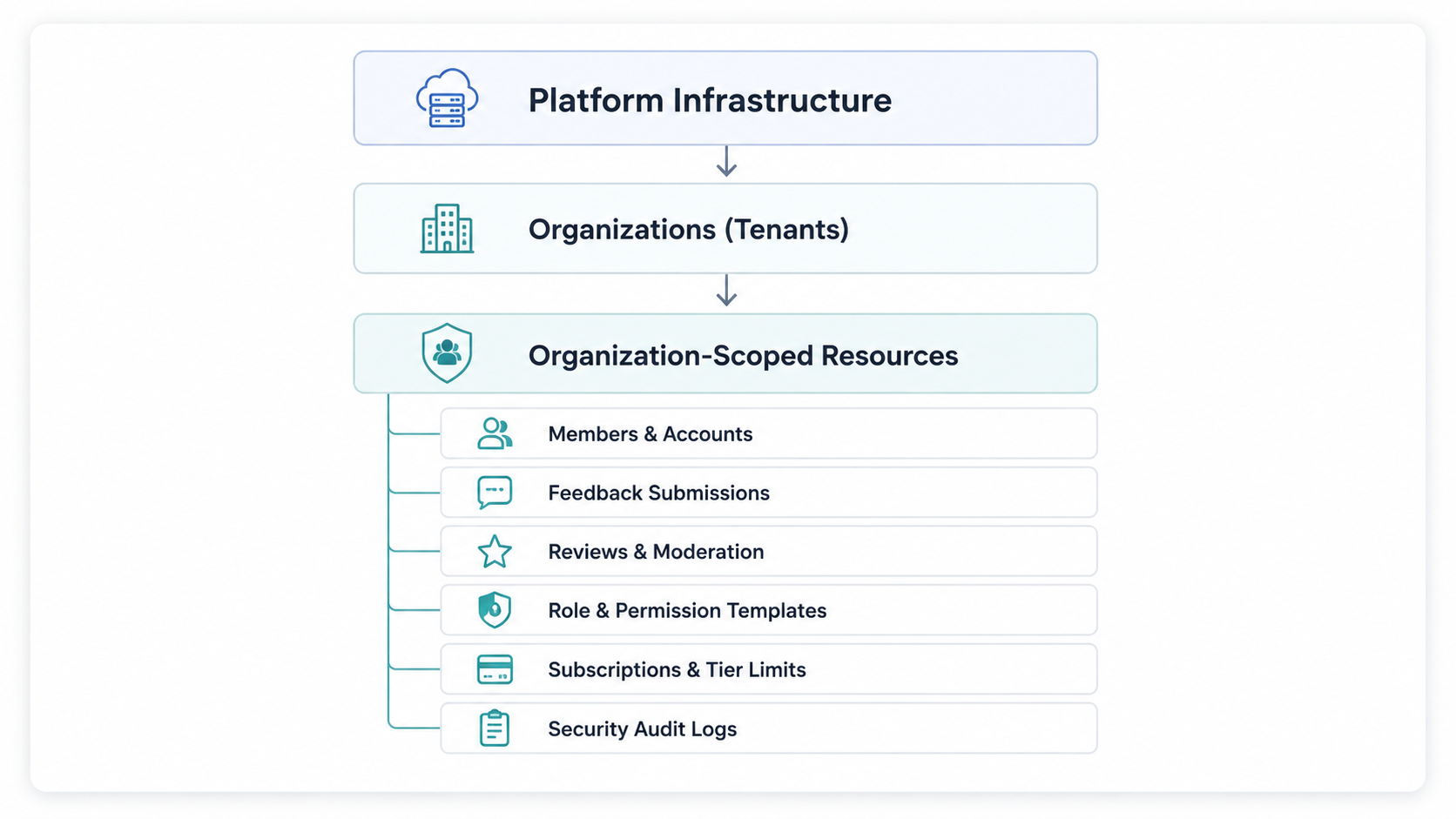
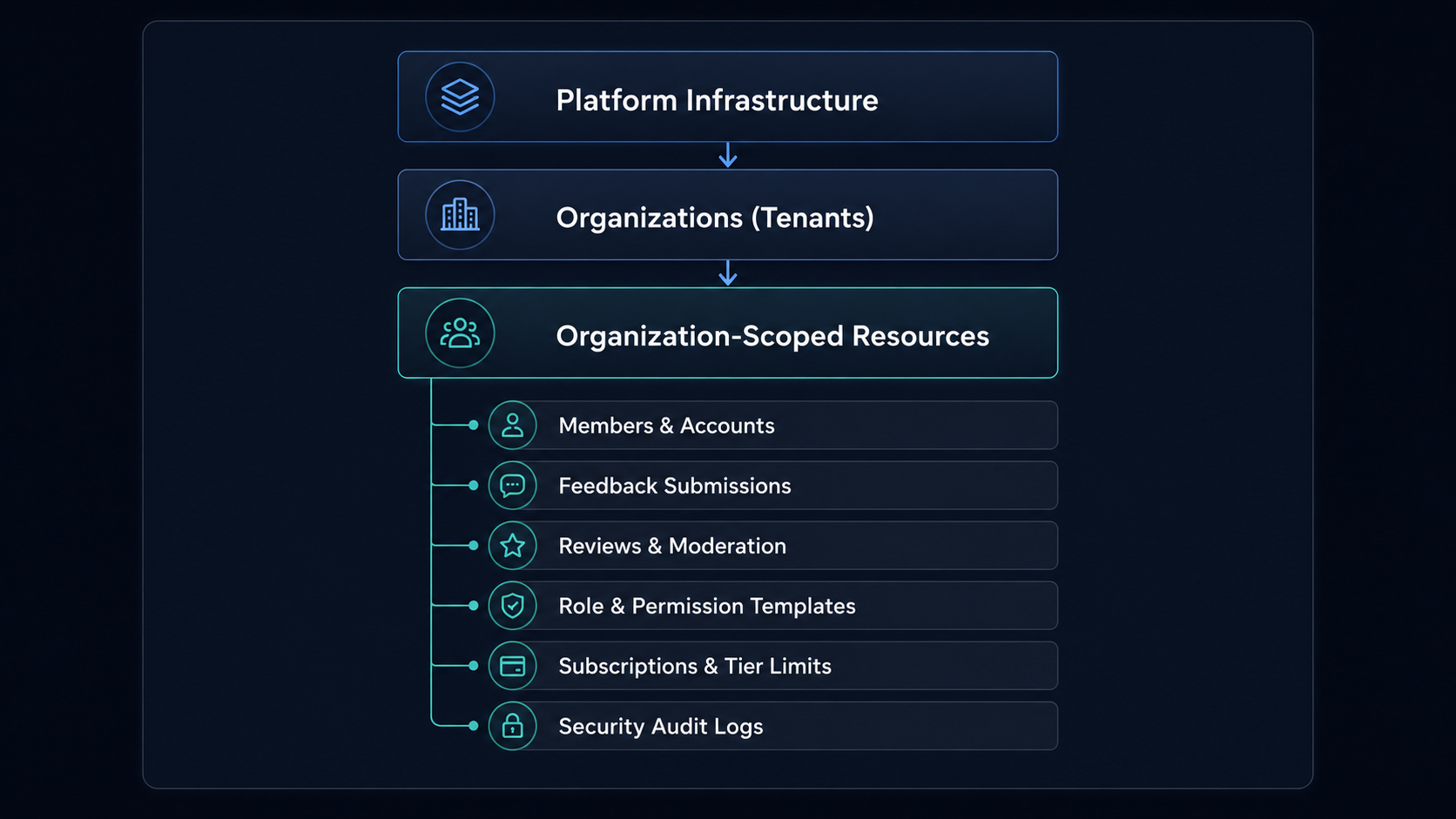
Veyra utilizes a shared application and database architecture with tenant-aware record scoping. Every organization resource is bound to a verified tenant identifier, ensuring strict resource scoping across all platform queries.
Tenant-scoped data entities:
- Organization Members: Users registered under a specific organization.
- Feedback Submissions: Pending and archived customer submissions.
- Reviews: Moderated, approved, or rejected public review records.
- Role Definitions: Organization-specific custom role templates.
- Subscription Records: Billing status, tier limits, and feature flags.
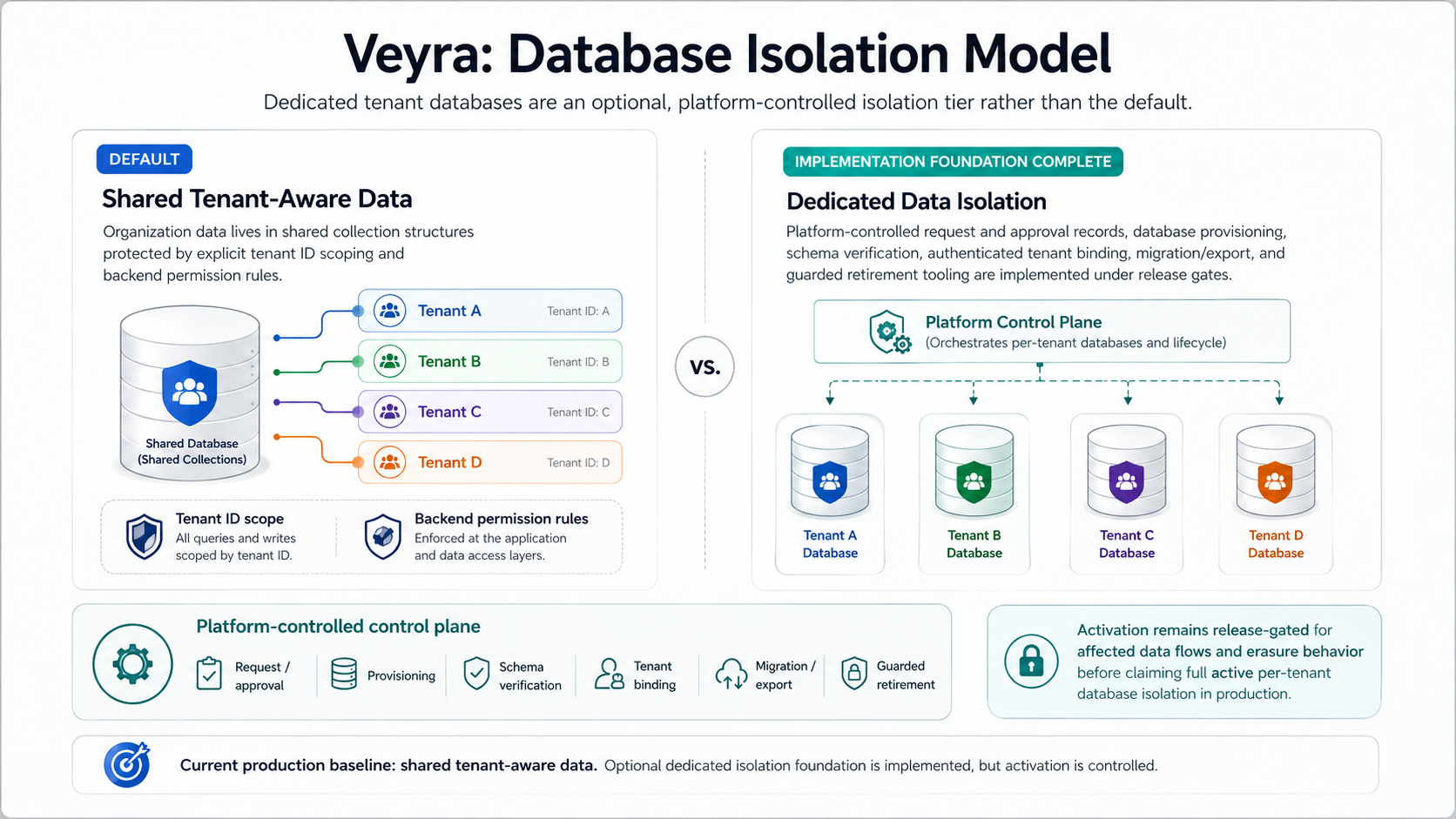
Database Isolation Model
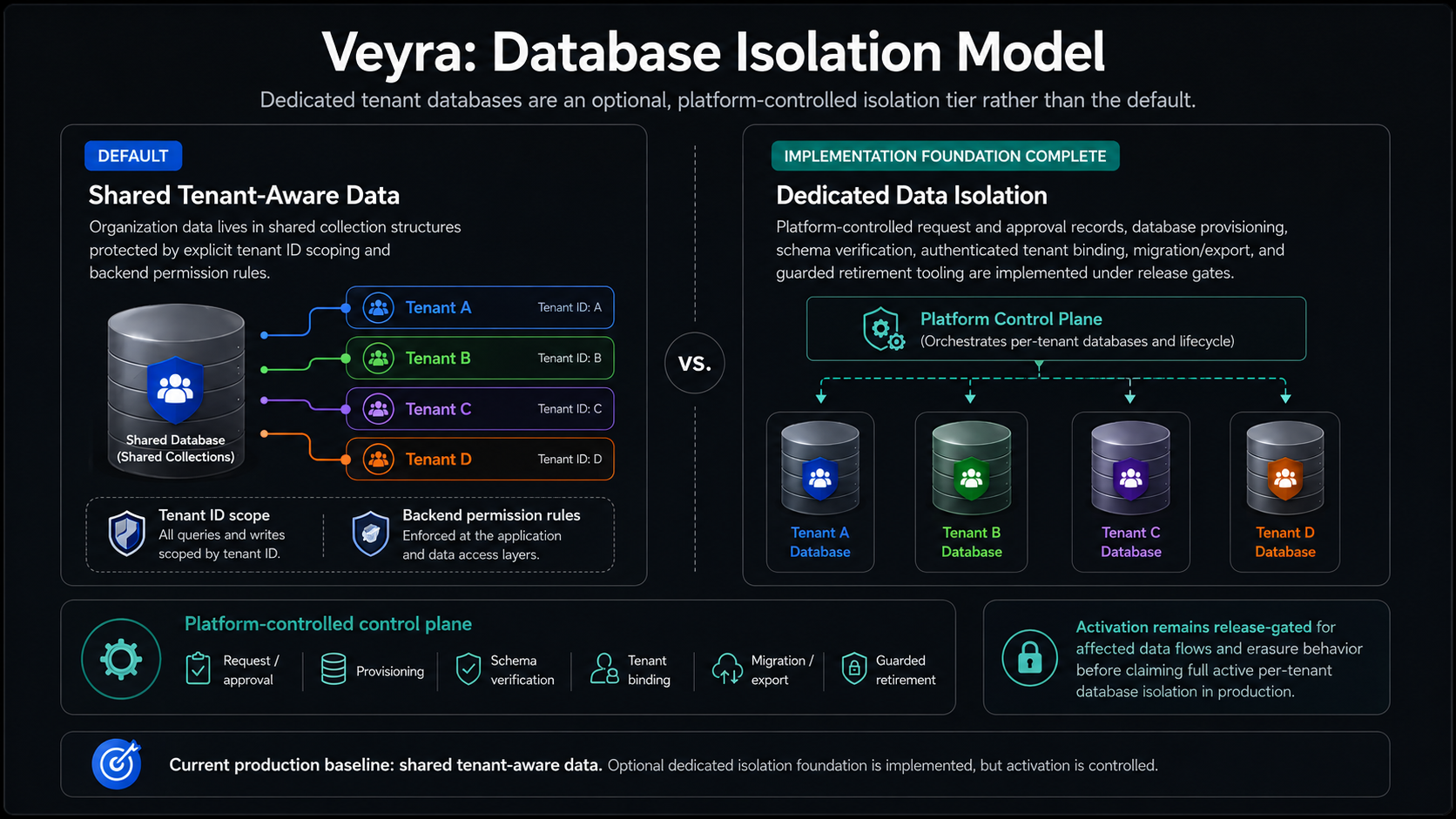
Dedicated tenant databases are an optional, platform-controlled isolation tier rather than the default. The initial implementation is complete with platform-controlled request/approval control-plane records, database provisioning, schema verification, authenticated binding resolution, data migration/export, and guarded retirement tooling. Activation remains subject to release gates for affected data flows and erasure behavior before claiming full active per-tenant database isolation in production.
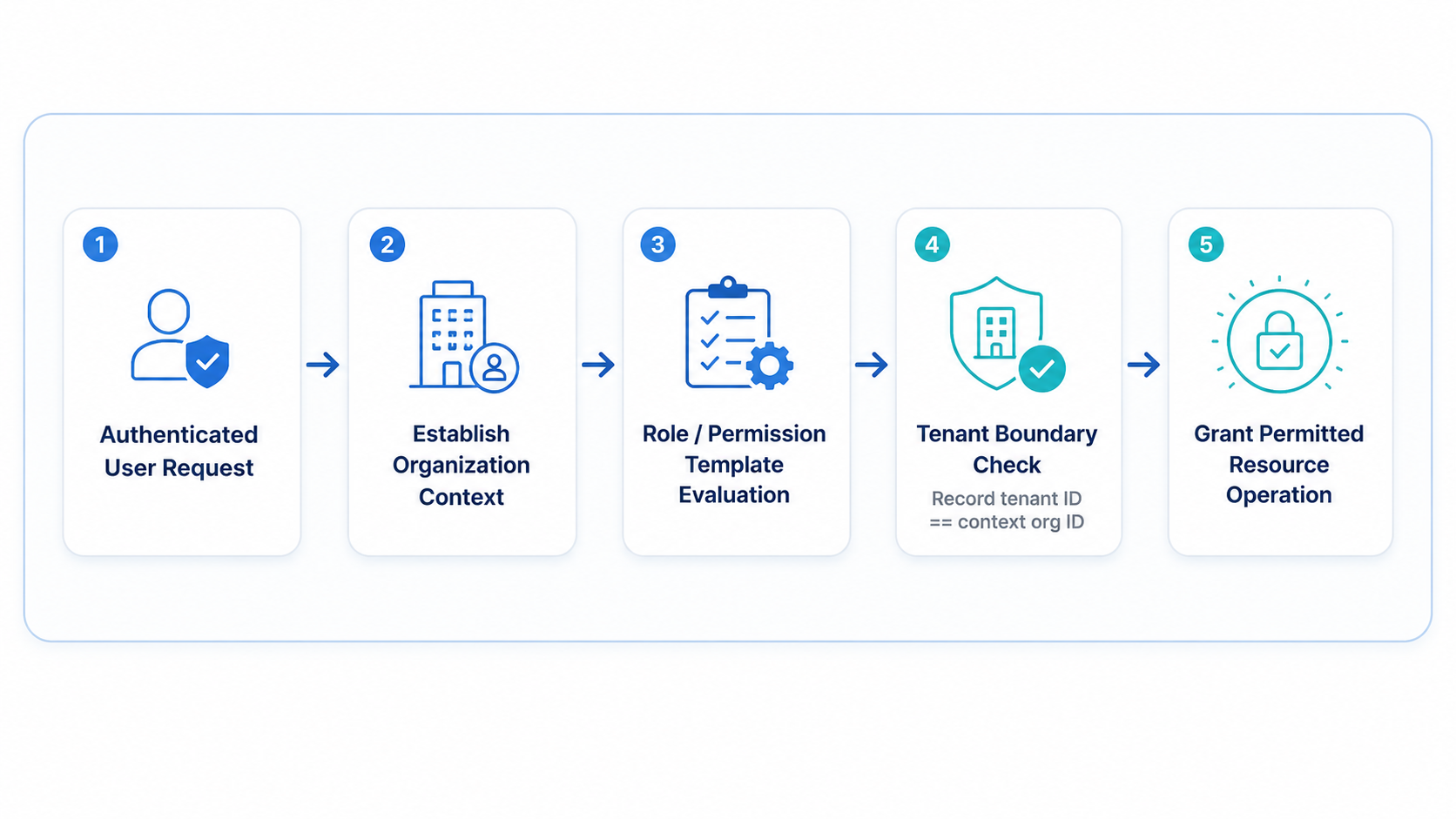
Core Tenancy Principle
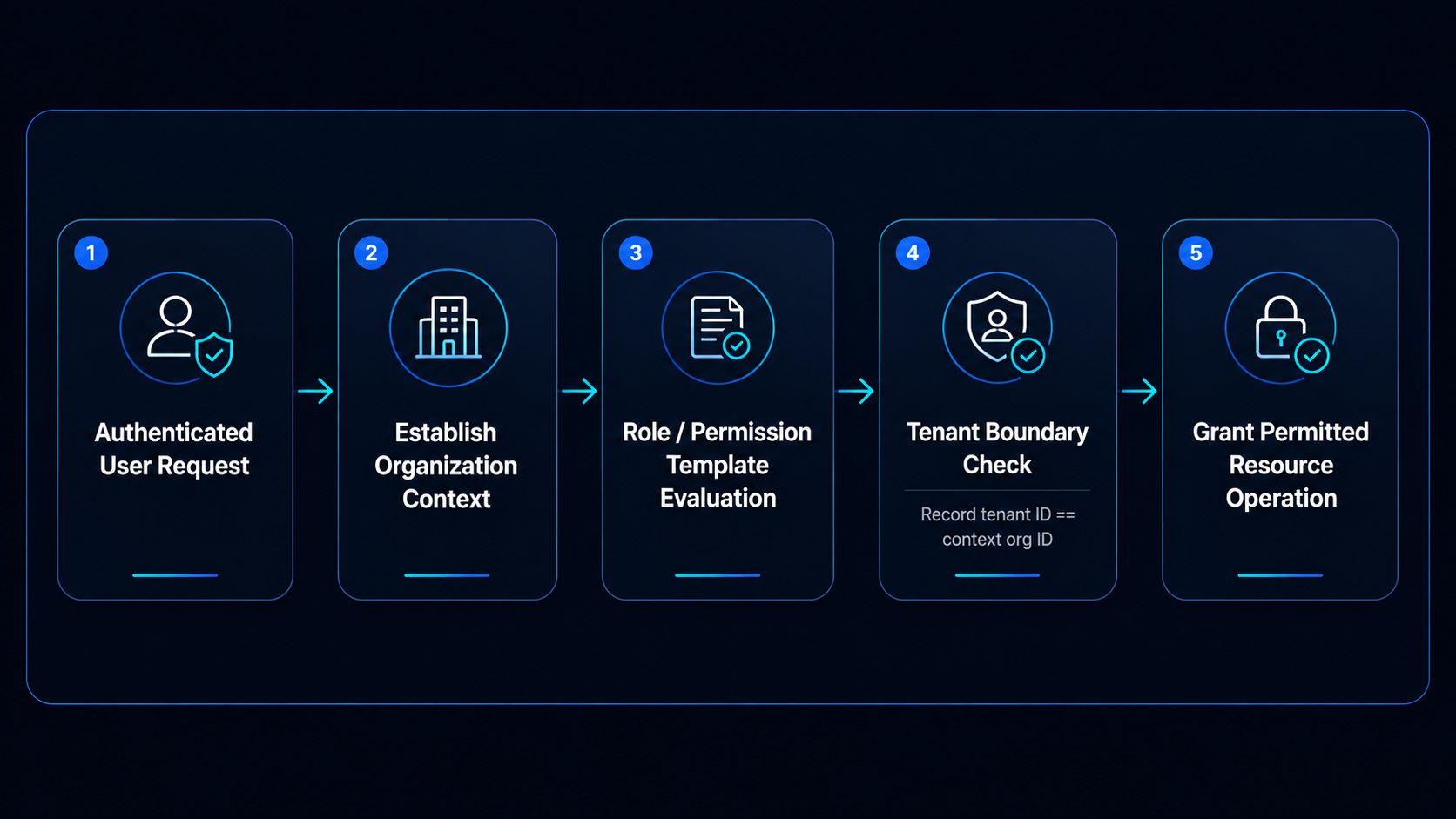
In Veyra, a user request is never authorized simply because the target record exists in the system. The platform evaluates identity, organization context, and specific role capabilities simultaneously before granting access:
Custom Role-Based Access Control (RBAC)
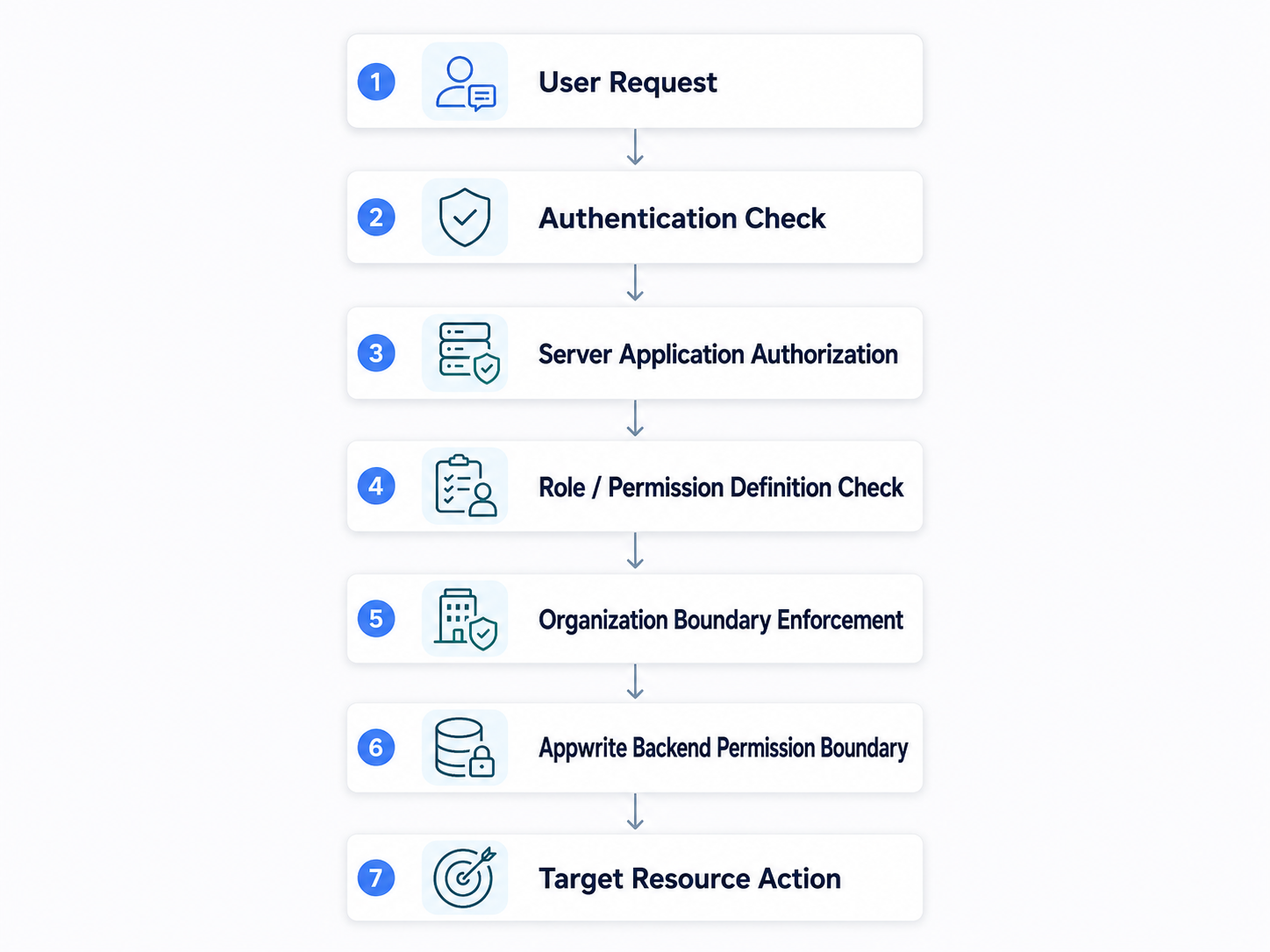
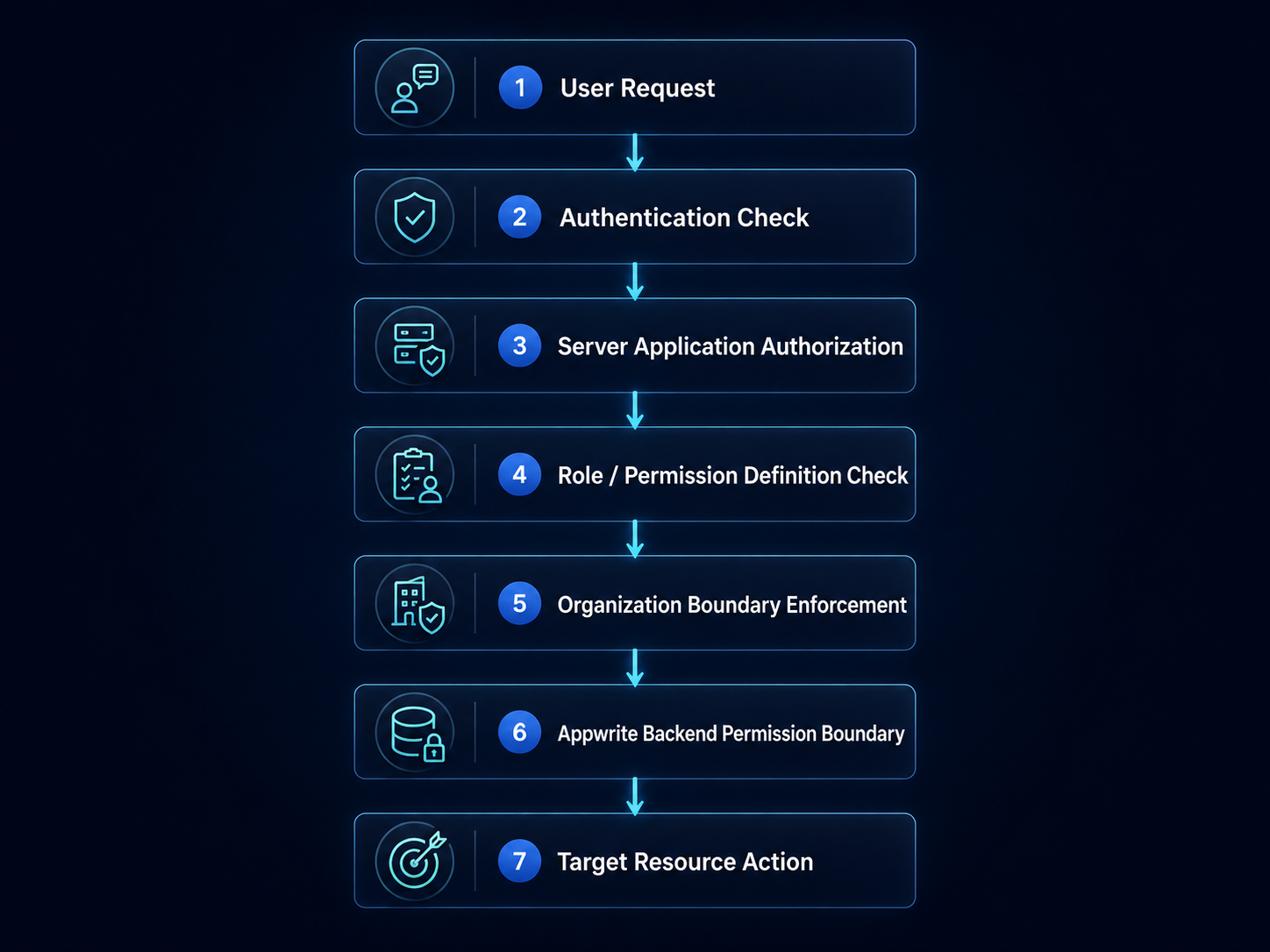
Veyra implements a multi-layered security and authorization architecture combining server-side application logic, Appwrite document permissions, and database-stored role definitions.
Role family hierarchy:
- platform_owner: Global system administrator managing platform-wide tenants, custom role template definitions, billing lifecycle, and operational health.
- org_admin: Organization administrator managing organization members, subscription settings, review policies, and moderation workflows using platform-defined role capabilities.
- dev: Developer operations role with access to observability dashboards, developer action management, Appwrite Function health/management, and failure signal forecasting.
- Configurable Role Templates: Platform-managed role templates with platform and tenant scope for fine-grained capability assignment.
Public QR Feedback Pipeline
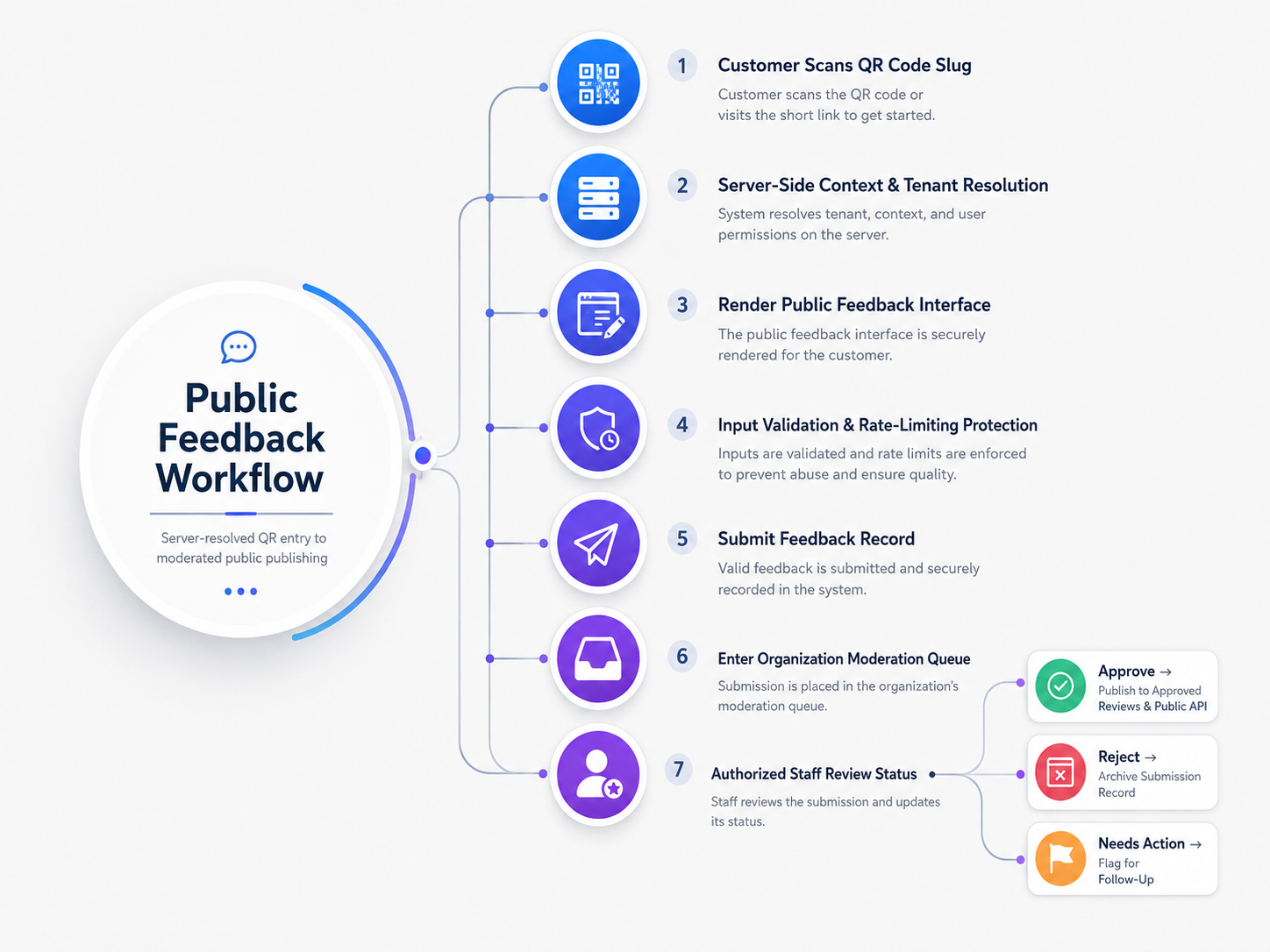
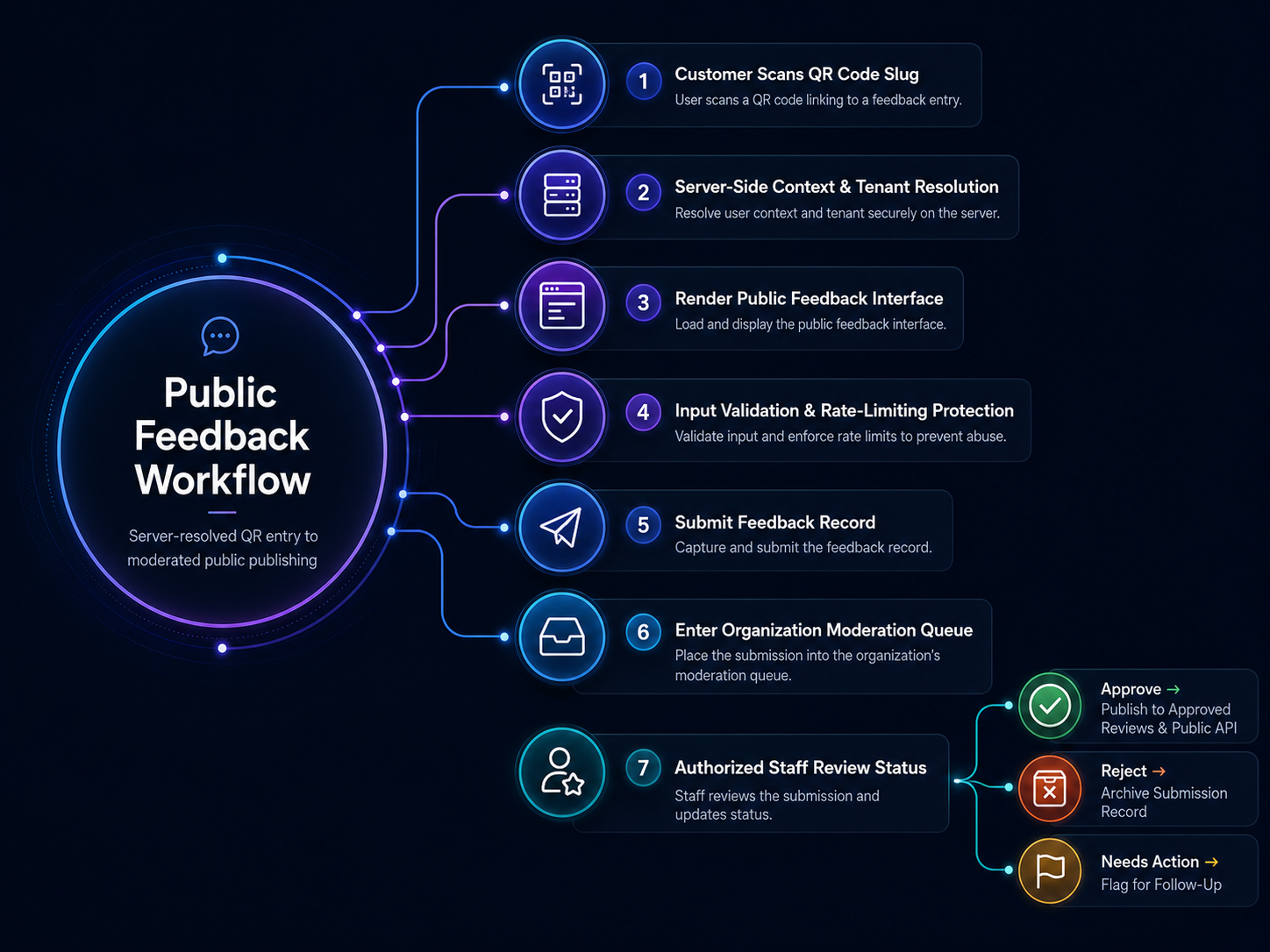
The public entry point for customer feedback relies on location-based QR code markers where an opaque QR slug resolves persisted organization and feedback configuration on the server, accepting anonymous submissions through validated, rate-limited public APIs without trusting a browser-supplied tenant identifier or encoding tokens in public URLs:
Subscription Lifecycle & Feature Access
Organization features, usage quotas, member limits, and API access are governed by explicit subscription lifecycle management.
Key subscription capabilities:
- Implemented Lifecycle Statuses: Active paid, payment pending verification, payment rejected, overdue grace period, free version active, free version expired, and subscription required.
- Feature & Quota Access Gates: Dynamic checks enforcing feature availability and member limits based on active subscription state.
- Payment Verification Workflow: Manual payment verification paired with automated billing lifecycle transitions, renewal reminders, grace periods, and free-version fallback.
Developer Operations & Analytics
Veyra combines structured operational telemetry, developer read auditing, Sentry error monitoring, health/cron/function tooling, and scrubbed developer-facing diagnostics. The developer dashboard separates current actionable posture from historical trends and forecast output so resolved issues do not inflate active operational counts.
simple-statistics with sample guards and R-squared fit interpretation.
arima package (minimum 84 daily observations, 7-day weekly seasonality and horizon, evaluated with MAE/RMSE) and automatically falls back to a weekly seasonal-naive baseline if SARIMA does not improve MAE by at least 5%.
Security, Data Governance & Quality
Platform security, data handling, and release stability are managed through explicit data retention policies, consent-gated public analytics, provider fallbacks, and multi-layered quality gates.
CI, Quality Gates & Deployment Profiles
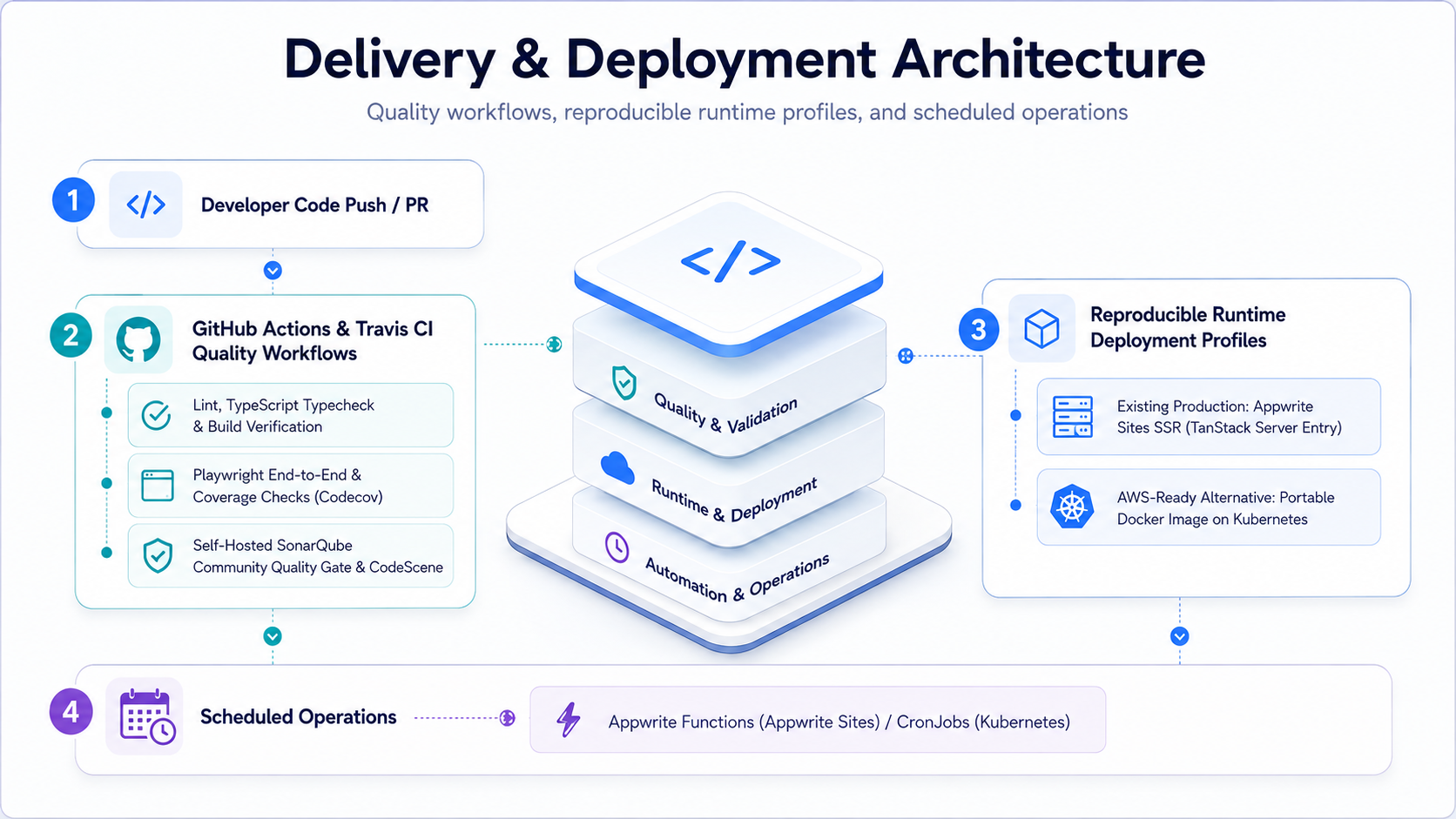
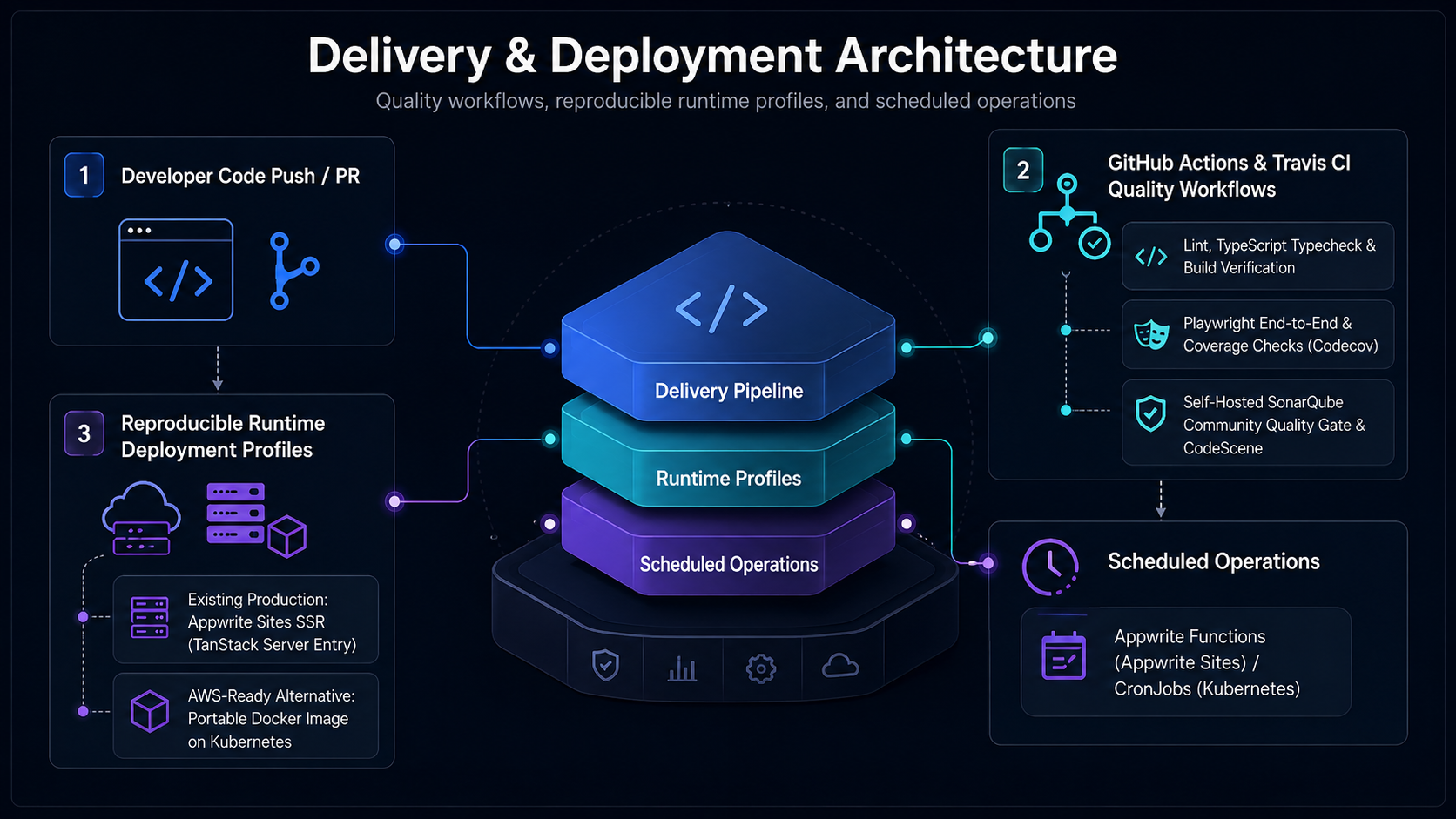
The repository uses a portable TanStack server build with Appwrite Sites SSR as the existing production profile and Docker/Kubernetes as an AWS-ready alternative. CI quality is enforced through GitHub Actions and Travis checks for lint/type/build, coverage, Playwright end-to-end testing, and self-hosted SonarQube Community quality gates, with Codecov and CodeScene providing supplementary quality evidence.
Roadmap & Planned Features
System & Architectural Constraints
Key Technical Decisions
1. Explicit Tenant-Scoped Record Architecture & Appwrite Sites SSR
Context: Multi-tenant SaaS serving multiple organizations requiring portable runtime rendering and strict data boundaries.
Decision: Standardized on React 19 + TanStack Start and Appwrite Sites SSR, binding resource models to explicit organization IDs with application controller boundary checks.
2. Server-Side Context Resolution for QR Entries
Context: Public customers need a frictionless way to submit feedback without creating accounts or exposing organization credentials in URLs.
Decision: Resolve opaque QR slugs to persisted organization and feedback configuration on the server, accepting validated submissions through rate-limited public APIs without trusting browser-supplied tenant identifiers.
3. Actionable Developer Operations & SARIMA Signal Forecasting
Context: Maintaining operational health across services and Appwrite Functions without inflating failure counts with resolved issues.
Decision: Build an in-app developer console separating current actionable posture from historical trend regression and SARIMA daily failure volume forecasting (benchmarked against a weekly seasonal-naive baseline using MAE/RMSE).
4. Privacy-First Consent-Gated Public Analytics
Context: Measuring public feedback engagement without compromising user privacy or mixing public analytics with authenticated tenant telemetry.
Decision: Implement a consent-gated first-party analytics boundary storing minimized page interactions under random post-consent IDs, with 30-day raw event retention, minimum-cohort suppression (≥ 5), and Median/MAD anomaly evidence.
5. Multi-Layered Quality Gates & Dual Deployment Profiles
Context: Ensuring release quality across schema updates, application services, and multiple deployment targets.
Decision: Combine GitHub Actions, Travis, Playwright, Codecov, CodeScene, and self-hosted SonarQube Community quality gates with dual Appwrite Sites SSR and Docker/Kubernetes runtime profiles.
6. Transactional Email Resilience
Context: Delivering critical administrative notifications and verification emails reliably.
Decision: Implement ordered Brevo primary and Resend fallback dispatch with fail-closed rules around uncertain provider delivery acceptance to prevent duplicate mail.
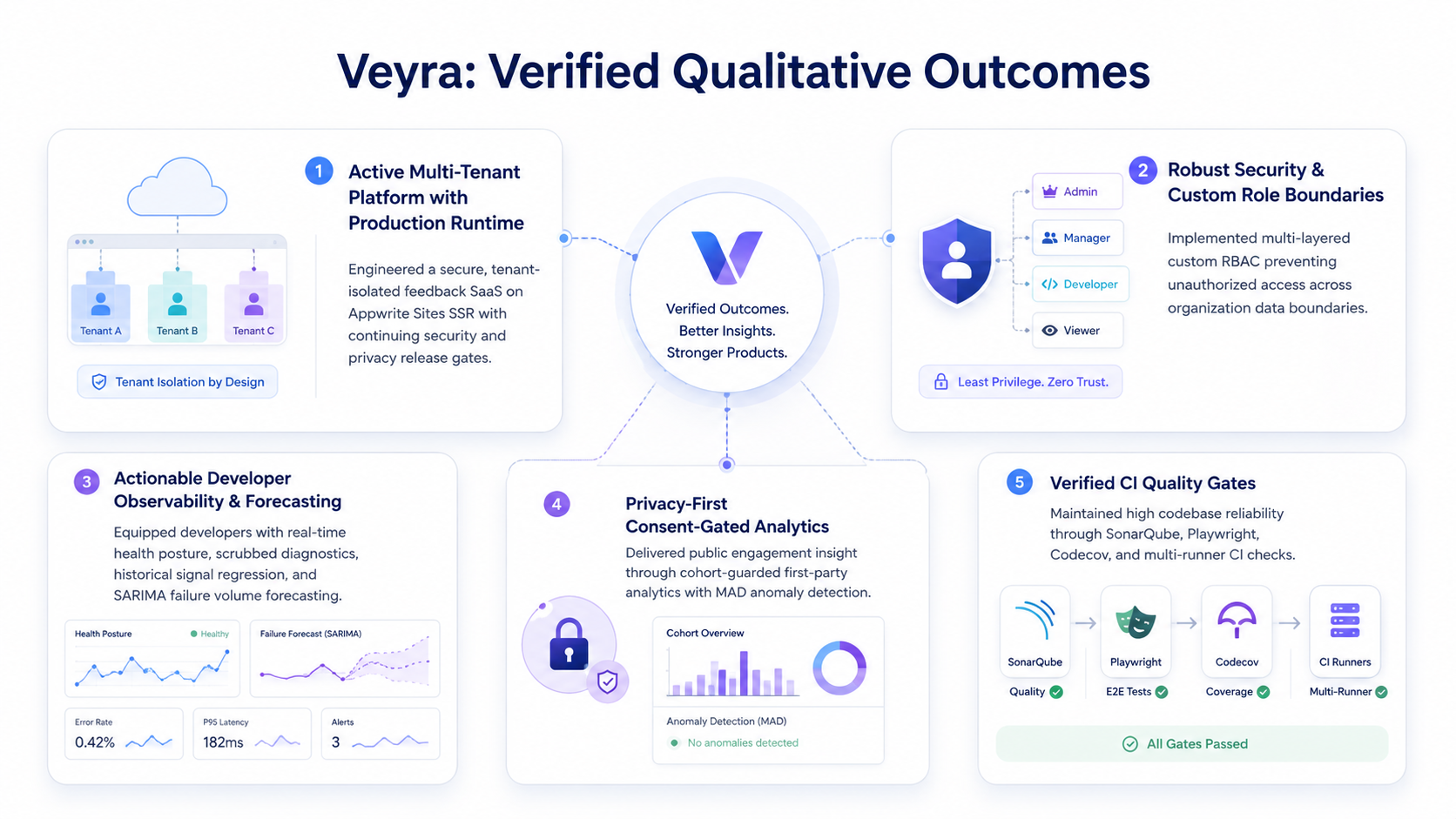
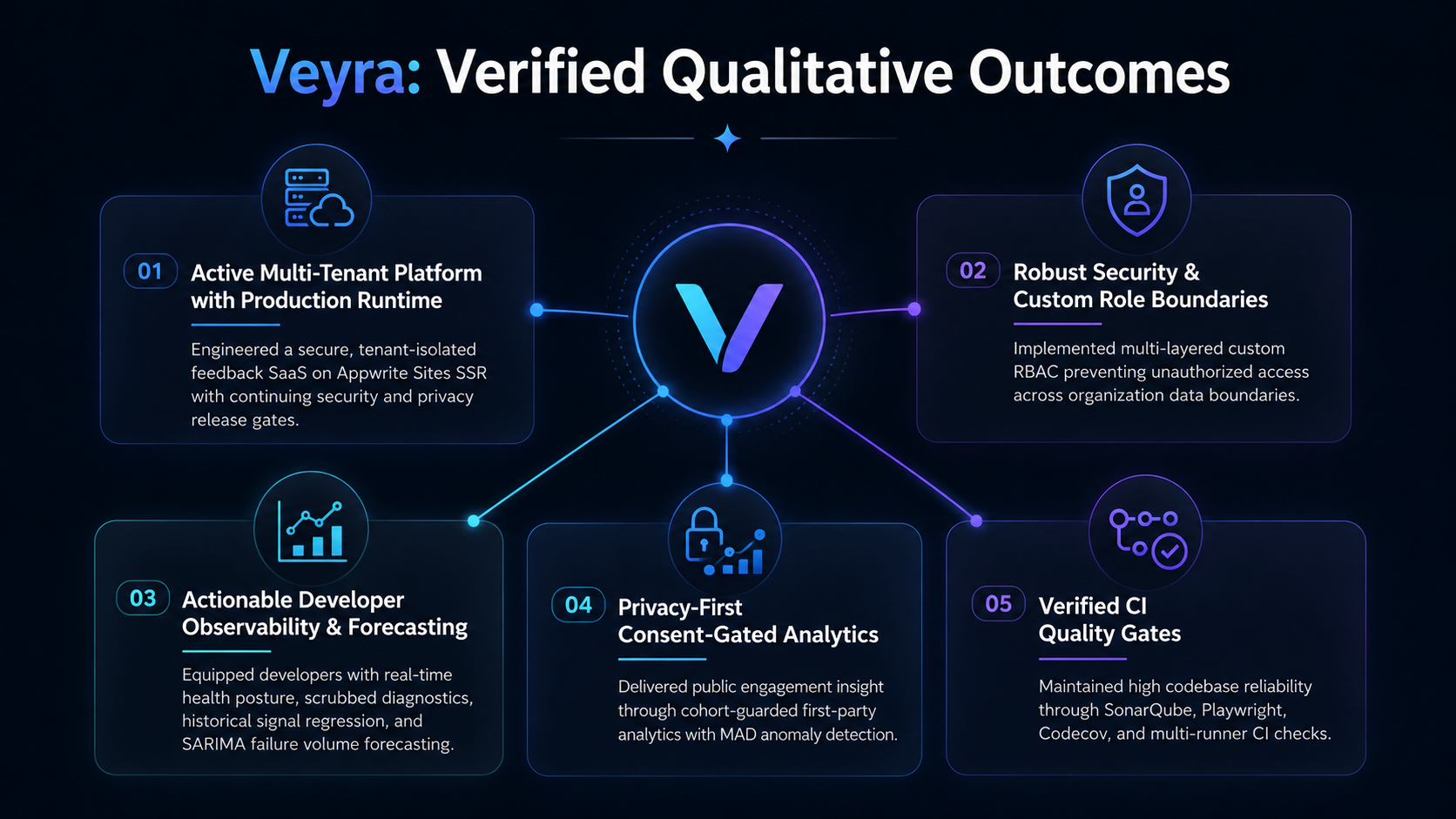
Verified Qualitative Outcomes
Lessons & Retrospective
Architecture & Authorization Boundaries First
Veyra demonstrated that establishing explicit tenant scoping, custom RBAC roles, and server-side context resolution upfront prevents security refactoring as feature sets expand.
Observability & Quality Engineering as Product Foundations
Integrating in-app developer operations, SARIMA signal forecasting, scrubbed diagnostics, and SonarQube quality gates allowed the team to maintain high operational stability and catch regressions early.